Published 18 November 2026
Why balance your wheels, and what are you paying for?
Steering wheel shaking at speed? When wheel weights help, why a per-wheel quote can cost less than a full set, and what else could cause the vibration.
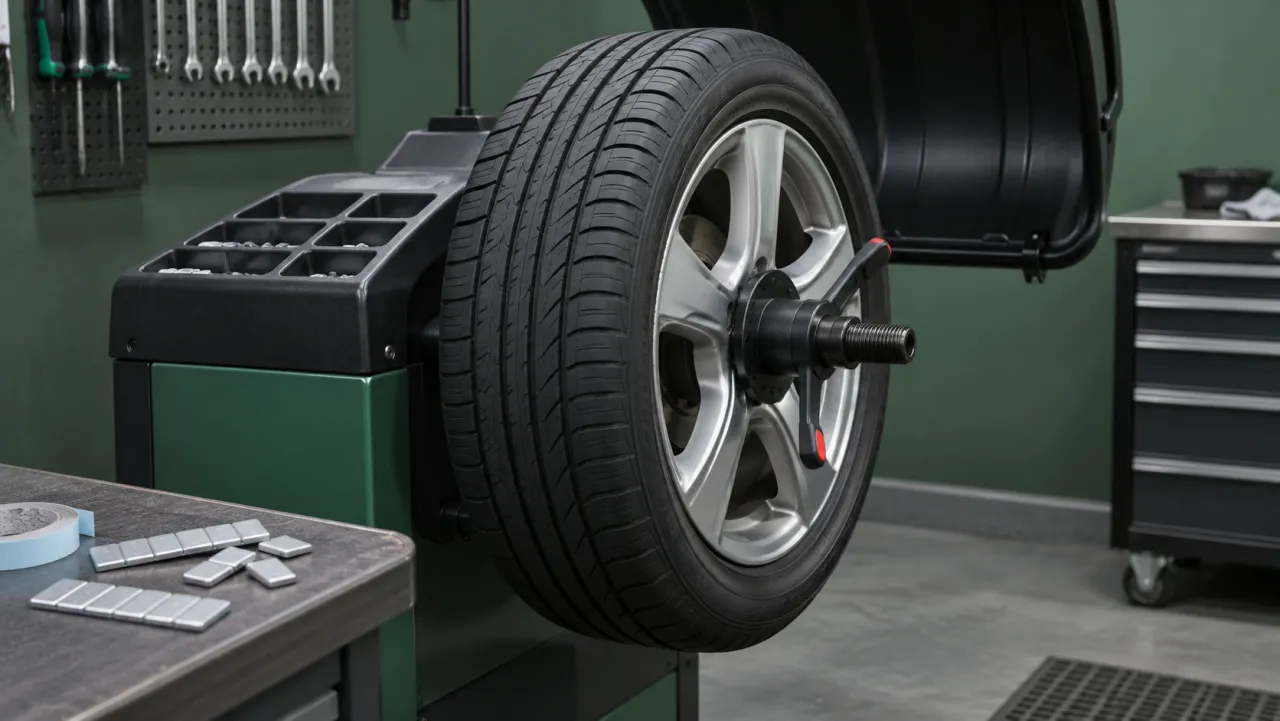
The car feels fine in town, then the steering wheel starts to shake on the highway. An out-of-balance wheel is one of the first things to check. But vibration alone doesn’t tell you that wheel weights are the answer.
What wheel balancing does
The tyre and rim spin as one assembly. If part of it is heavier than the rest, the wheel can vibrate at speed. A balancer measures where and how much weight is needed. The technician fits the weights and measures again. If imbalance was the cause, the ride should be smoother, with less unnecessary vibration through the tyre and suspension. Michelin explains how it works.
When to have the wheels checked
- After a new tyre is fitted or a tyre is remounted after repair: the assembled wheel needs balancing.
- When swapping complete seasonal wheels: that isn’t the same as removing a tyre from its rim. Ask for a check if you noticed vibration or a missing weight, or if a wheel took a knock.
- After hitting a pothole or kerb: have the tyre and rim inspected first. If it’s shaking badly, don’t speed up just to see whether it happens again.
Why quotes can differ
A per-wheel quote isn’t the price for four wheels. Balancing a wheel already off the car is one job; taking the wheels off and refitting them, remounting tyres or checking a rim for runout is more work. Ask whether weights and a repeat measurement are included, then compare the total for the work you need. Straightening a bent rim is a separate job. See current TAMIS prices.
What balancing won’t do
It won’t straighten a rim, repair a tyre, adjust the alignment angles or fix worn suspension or brakes. If the car pulls to one side, shakes only under braking or still vibrates after balancing, ask for a diagnosis rather than a second set of weights. Michelin’s guide to possible causes of vibration.
Blog
Published 18 November 2026
How often should you change engine oil? Is 7,000–8,000 km always right?
Why mileage alone doesn’t set the interval, how short trips differ from motorway driving and what to do if a used car comes without service records.
Published 18 November 2026
5W-30 or 5W-40: which oil for a high-mileage engine?
Decode the numbers, check the manufacturer’s approval and find out why mileage alone isn’t a reason to switch to 5W-40.

Published 1 November 2026
EU tyre labels: what do A–E, wet grip and noise in dB mean?
Tyres of the same size can differ in grip and noise. A short guide to the EU label, EPREL and what those letters cannot promise.